



Heated Holding Cabinets vs. Countertop Food Warmers: Which Fits Your Kitchen?


Most kitchens that hold hot food end up choosing between two kinds of equipment. A warming cabinet is an enclosed unit, often on wheels, that holds many pans or trays at once. A countertop food warmer is a smaller unit that sits at the point of service and holds the pans in use. They do the same basic job, keeping cooked food at a safe serving temperature, but they fit very different workflows. This guide compares them on the factors that matter in daily use, so you can decide which one your kitchen needs, or whether it needs both.
The Short Answer
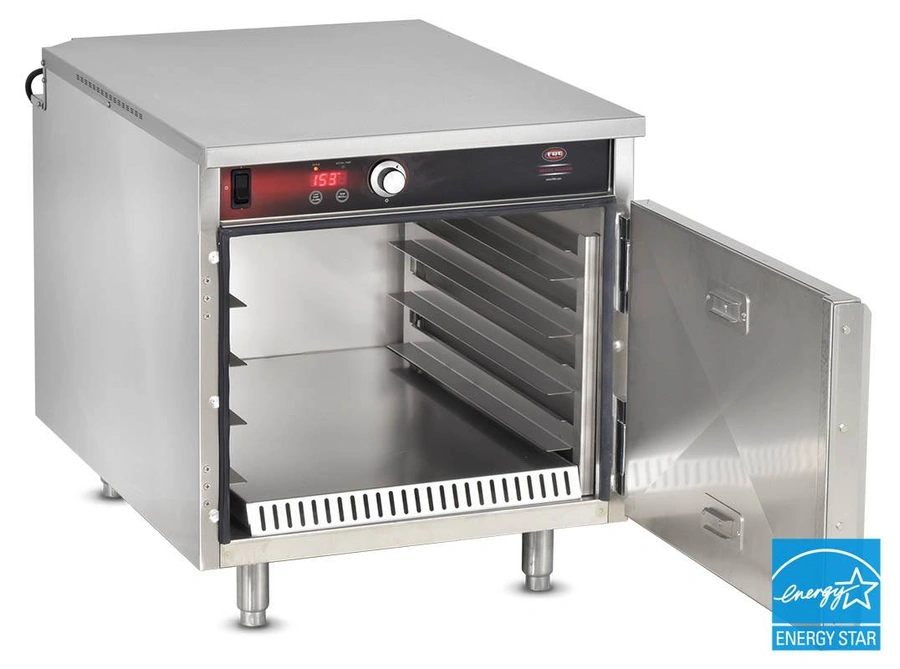
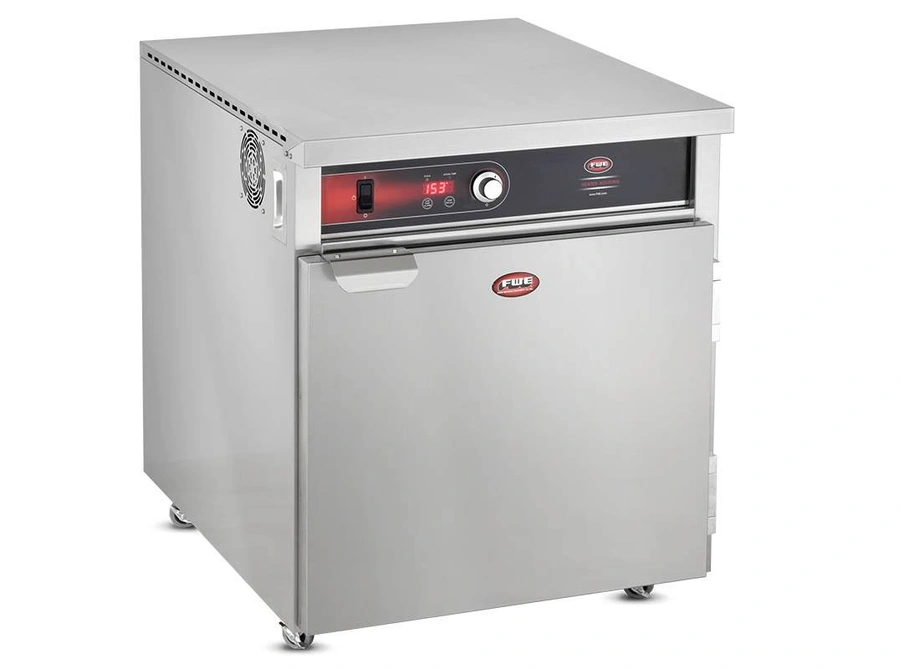
Choose a holding cabinet
When you cook in batches, hold food for longer periods, or need to move a lot of food from the kitchen to the service area.
Choose a countertop warmer
When food moves quickly, volume is smaller, and the pans need to stay within arm's reach of the person serving.
Many kitchens use a cabinet in the back to stage food and countertop warmers at the service point.
Side-by-Side Comparison
| Factor | Heated holding cabinet | Countertop food warmer |
|---|---|---|
| Capacity | Many pans or trays, often in the dozens | A few pans, sized to one serving station |
| Hold time | Longer holds, because the enclosed, insulated cabinet keeps heat in | Shorter holds, because pans are exposed while serving |
| Moisture control | Often available, which protects texture on longer holds | Depends on the model, usually wet-heat wells or dry heat |
| Footprint | A floor unit, taller and wider | Sits on a counter or table |
| Mobility | Usually on casters, and many are designed to roll | Portable, but limited by the size of the unit |
| Power | May need higher voltage or a dedicated circuit | Often runs on a standard outlet |
| Access | Door must be opened, which loses some heat | Open pans are easy to reach |
| Best fit | Batch cooking, staging, bulk transfer | Point of service, small volume, quick turns |
When a Holding Cabinet Fits
A cabinet makes sense when production and service happen at different times or in different places.
- Batch cooking. You cook a large amount at once and need it to stay good while it is served over a longer period.
- Staging for peak periods. You want food ready before the rush so the line never runs out.
- Moving food in bulk. You are rolling food from the kitchen to a dining room, a banquet space, or a serving line.
- Longer holds. Insulation and moisture control protect texture when food waits more than a short time.
- Mixed items. Shelves or slides let you hold several dishes at once, at one temperature.
Cabinets are specified by the number and size of trays or pans they hold. Our hotel pan sizing guide covers the standard pan sizes so you can check what fits.
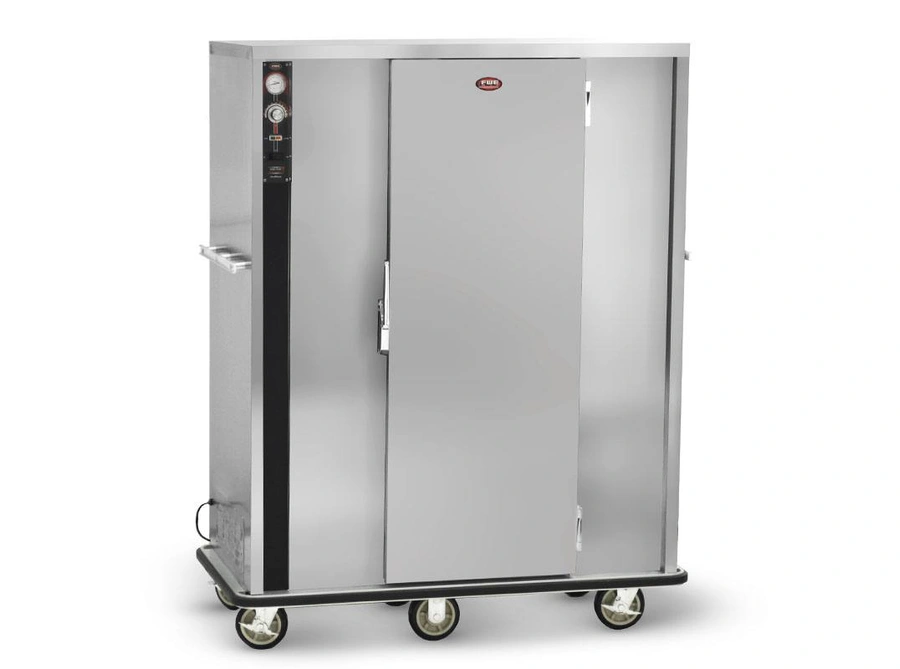 Banquet Cart FWE P-144-XL P-Series Banquet Cart
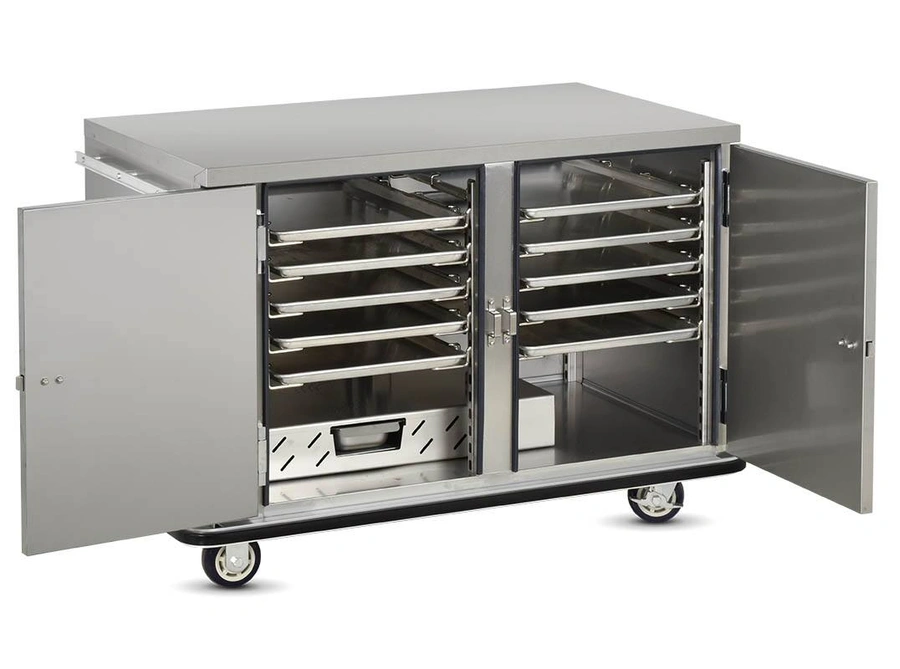 Mobile Heated Cabinet FWE TS-1826-14 Heated Cabinet
 Transport Cabinet FWE ETC-UA-6HD Heated Transport Cabinet, 1/2 Height
 Reach-In Cabinet Traulsen RHF232W-FHS 2-Door Heated Reach-In
When a Countertop Warmer Fits

A countertop warmer makes sense when the food is served right where it is kept.
- Point of service. The pans sit next to the person serving, so they can reach in without opening a door.
- Smaller volume. You hold a few pans at a time, for a short time.
- Limited space. There is no room for a floor unit, but there is room on a counter.
- Simple power. A standard outlet is all you have.
- Flexibility. You can move the unit between stations, or put it away between services.
Countertop warmers come in wet-heat versions, with a water bath around the pans, and dry-heat versions that use radiant or direct-contact heat. Our commercial food warmer buying guide explains which suits which foods.
Using Both: Cook, Stage, Serve
Larger operations often combine the two, which separates the three steps of the workflow:
- Cook in batches in the kitchen.
- Stage the finished food in a holding cabinet, at a safe temperature.
- Serve from countertop warmers at the line, refilling pans from the cabinet.
This keeps the pans at the line small and fresh, limits how long any one pan sits in the open, and gives you a buffer if production is delayed.
How to Size Either One
For both types, count pans, not square feet.
- Estimate the portions you serve per hour at peak.
- Decide how often you refill or cook a new batch.
- Multiply to find the portions you need to hold at once.
- Divide by the number of portions one pan holds at your serving size.
- Add 10 to 20 percent for headroom.
For example, a kitchen that serves 200 portions an hour and cooks every 30 minutes needs to hold about 100 portions. If a pan holds about 20 portions, that is five pans. With a 20 percent buffer, plan for six. If the point of service only holds two or three pans at a time, a cabinet can hold the rest. This is an illustration, and your serving size will change the numbers.
Questions to Ask Before You Buy
| Question | Why it matters |
|---|---|
| What pan or tray sizes does it accept? | The unit has to match the pans you own or plan to buy |
| How many pans or trays fit? | Capacity is the main sizing factor |
| Does it have moisture or humidity control? | Important for longer holds of moist or crisp foods |
| What voltage and amperage does it need? | A 208V or 240V unit may need an electrician and a dedicated circuit |
| How long does it take to preheat? | Affects when you need to turn it on |
| Does it roll, and will it fit through your doors? | Measure doorways and elevators for mobile units |
| How easy is it to clean? | Removable racks, smooth interiors, and accessible gaskets save time |
| What does the warranty cover? | Heating elements and controls are the parts most likely to need service |
Food Safety and Daily Use
- Preheat first. Turn the unit on empty and let it reach temperature before loading food.
- Load hot food. Under the FDA Food Code, foods that need temperature control for safety should be held hot at 135°F (57°C) or above. Check your local code, since some set a higher number.
- Do not use it to reheat. Holding equipment keeps food hot but is not designed to bring cold food up to temperature.
- Verify with a probe thermometer. The unit's dial shows the air temperature, not the temperature of the food. Our thermometers and timers category has probe thermometers.
- Limit door openings on cabinets, since each opening lets heat out.
Common Mistakes
- Buying a cabinet for a kitchen that only needs a point-of-service warmer, or the reverse
- Loading food that has already cooled
- Overfilling, which blocks airflow and creates uneven temperatures
- Skipping the preheat
- Placing the unit far from where food is served
- Ignoring a worn door gasket, which lets heat escape
- Skipping routine cleaning and thermostat checks
Browse Heated Holding Equipment
Cook's Direct carries heated and holding cabinets as well as countertop food warmers from a range of manufacturers. Holding cabinets are available from brands such as Cres Cor and Alto-Shaam, and food warmers from brands including Adcraft, Nemco, Duke, Vollrath, and Winco. Availability changes, so check the category pages for the current selection.
Related Guides
- Commercial food warmers: types, sizes, and how to choose
- Portable food warmers for catering, buffets, and holiday service
Not sure which fits your kitchen? Call our team at 866-613-2617 and we will help you size the equipment.
