


Portable Food Warmers for Catering, Buffets, and Holiday Service

When food has to stay hot away from the kitchen, "portable" can mean several different things. It might be an insulated carrier that travels in a van, an electric warmer that sits on a buffet table, a chafing dish heated by canned fuel, or a heated cart rolled down a corridor. Each one solves a different problem, and picking the wrong one is the most common reason food arrives lukewarm. This guide compares the four main options, shows how to match them to your event, and covers the power planning and food safety steps that keep service on track.
Four Ways to Keep Food Hot Away From the Kitchen
| Option | How it works | Needs power? | Best for |
|---|---|---|---|
| Insulated food carrier | Passive insulation holds the heat of food that is already hot | No | Transporting food and holding it for hours without an outlet |
| Electric countertop or buffet warmer | Heating elements warm pans in wet or dry wells | Yes | Serving lines and buffets with outlets available |
| Fuel-heated chafing dish | A canned fuel burner under a water pan | No | Short buffets and events without outlets |
| Mobile heated cart or cabinet | Electric heat in a rolling cabinet | Yes | Moving and holding large amounts of food on site |
Insulated carriers do not create heat. They hold heat, so the food and often the carrier itself should be hot when loaded. They are the right tool for delivery and for holding food until service. How long they hold temperature depends on the model, how full it is, and how often the door is opened.
Electric warmers add heat continuously, which makes them the better choice once food is on the serving line. Wet-heat units keep sauces and sides moist, and dry-heat units suit fried and roasted items.
Chafing dishes are the simplest option for a short event with no power. Fuel burns for a limited time, and wind or drafts can pull the temperature down, so they need watching.
Mobile heated cabinets and carts are the middle ground. They hold large batches, roll to the service area, and plug in once they arrive.
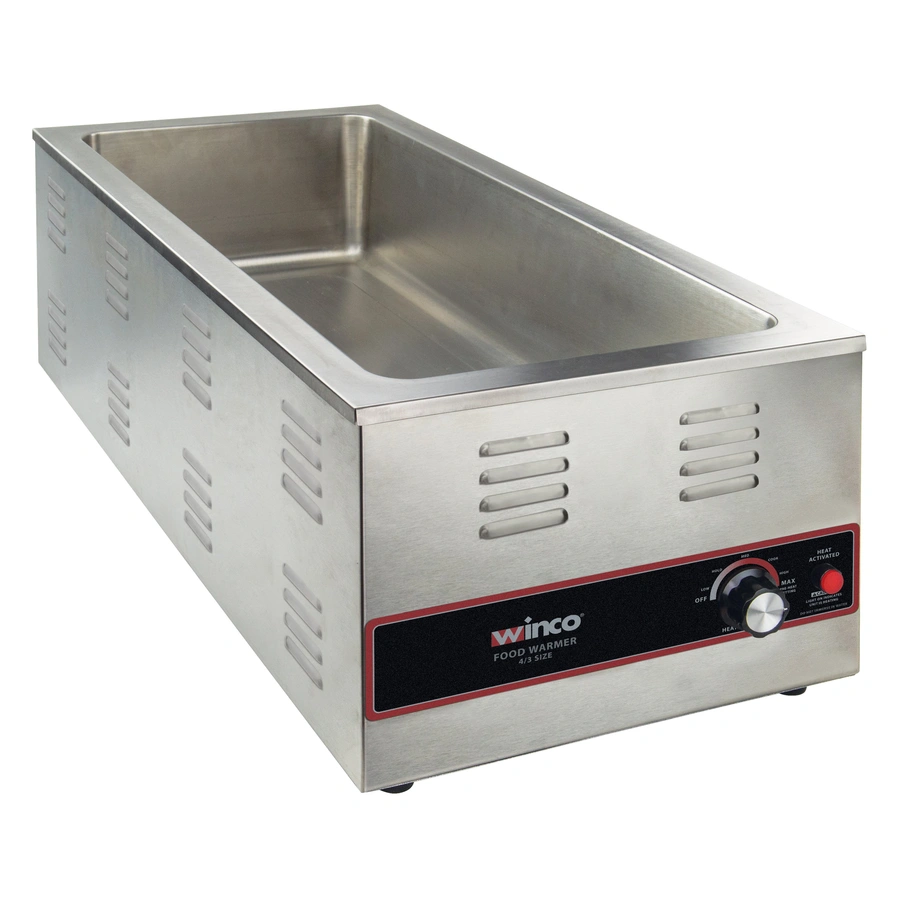 Buffet Line Winco FW-L600 Electric Food Warmer
 Soup Station Vollrath 72029 Cayenne Twin Rethermalizer Kit
 Soup Kettle Global Solutions GS1650 10.5 Qt Soup Kettle
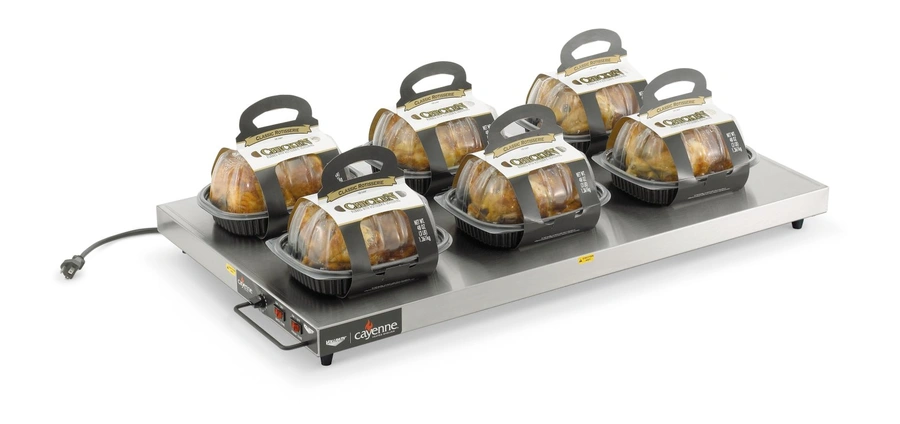 Heated Shelf Vollrath 7277036 Cayenne Heated Shelf
Match the Option to the Event
| Situation | Recommended approach |
|---|---|
| Delivering food off site, with no power at the destination | Insulated carriers, with food and carriers preheated |
| Buffet with outlets available | Electric wells or countertop warmers at the line |
| Long banquet with many guests | A mobile heated cabinet to stage batches, with smaller warmers at the stations |
| Short outdoor event, no outlets | Fuel-heated chafing dishes, protected from wind |
| Staff or family holiday meal at a workplace | A countertop warmer for sides and gravy, plus an insulated carrier for the main dishes |
 For Sides & Gravy Vollrath 72017 7-Qt. Cayenne Heat 'N Serve Warmer
 For Soups & Chili Winco FW-11R250 Electric Food Warmer
Most larger events use two options together: a carrier or cabinet to stage food and a warmer at the service point to hold the pans that are in use.
Plan the Electrical Load

Electric warmers are limited by the circuit they plug into. A few numbers make the planning easy.
- Amps equal watts divided by volts. A 1,500-watt warmer on a 120V circuit draws 12.5 amps.
- Continuous loads have a limit. Electrical codes generally limit continuous loads to 80 percent of a circuit's rating. That is 12 amps on a 15-amp circuit and 16 amps on a 20-amp circuit.
| Equipment on one circuit | Draw at 120V | Fits a 15-amp circuit? | Fits a 20-amp circuit? |
|---|---|---|---|
| One 1,000-watt warmer | 8.3 amps | Yes | Yes |
| Two 1,000-watt warmers | 16.7 amps | No | No |
| One 1,500-watt warmer | 12.5 amps | No | Yes |
| Two 1,500-watt warmers | 25 amps | No | No |
A few more rules protect people and equipment:
- Count everything on the same circuit, including coffee makers and lights.
- Use properly rated cords. Avoid daisy-chaining power strips or extension cords.
- Use outlets with the required protection in outdoor or wet locations.
- Ask a licensed electrician when you plan to run several units at once.
If an event space has limited power, that decision may push you toward insulated carriers or fuel-heated chafers.
A Holiday Service Timeline

Holiday meals and large events put a lot of food on the table at once. Working backward from the serving time keeps hot food hot. The times below are a starting point, so adjust them for your equipment.
| When | What to do |
|---|---|
| 90 minutes before service | Inspect the equipment, plug in the warmers, and preheat them empty, following the manufacturer's preheat guidance |
| 60 minutes before | Confirm temperatures with a probe thermometer and stage pans, lids, and serving utensils |
| 45 to 30 minutes before | Move food into the preheated pans while it is still hot, at 135°F (57°C) or above, and cover the pans |
| During service | Check temperatures at regular intervals and rotate full pans in as others empty |
| Last hour of service | Replace pans instead of topping them off, and follow your local rules for discarding held food |
Two habits make the biggest difference. First, use two sets of pans per dish when you can, so one is always in the warmer while the other is on the line. Second, label pans with the time they went out so you can rotate and discard food in the right order.
Food Safety on the Move
- Start hot. Under the FDA Food Code, foods that need temperature control for safety should be held hot at 135°F or above. Some local codes set a higher number, so check yours.
- Do not reheat in a warmer. Warmers hold heat. Reheating cooled food in a warmer is slow and unsafe.
- Use a probe thermometer. A dial on the warmer does not tell you the temperature of the food in the pan.
- Cover everything. Lids hold heat and keep the food out of the air.
- Follow your local rules if you use time instead of temperature as a control.
Pans and Accessories
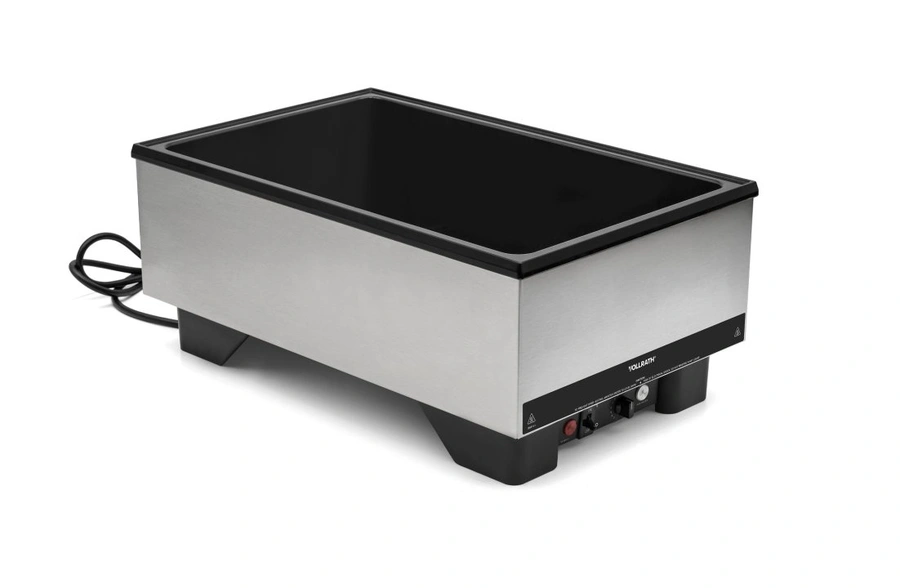
The warmer is only part of the setup. Plan the accessories as well:
- Pans that match the wells. See our hotel pan sizing guide for standard sizes and depths.
- Lids for every pan, so you can cover food during transport and service
- Serving utensils for each dish, so utensils are not shared between foods
- A probe thermometer and a way to log temperatures
- Extra fuel for chafing dishes, sized for the length of the event
- Rated extension cords and a spare outlet plan
Event-Day Checklist
- Confirm the power available at the venue, and how many outlets are on each circuit
- Choose carriers, electric warmers, or chafers based on the time and the power
- Preheat all equipment before food goes in
- Load food at 135°F or above, and cover it
- Check temperatures at regular intervals
- Replace pans instead of topping off
- Keep a backup option ready, such as an extra carrier or fuel
Related Guides
- Commercial food warmers: types, sizes, and how to choose
- Heated holding cabinets vs. countertop food warmers
Cook's Direct carries insulated carriers and food storage from brands such as Cambro, along with chafing dishes and buffet service equipment. If you are planning a large event or a high-volume holiday service, call our team at 866-613-2617 and we will help you plan the equipment.
