







Commercial Food Warmers: Types, Sizes, and How to Choose
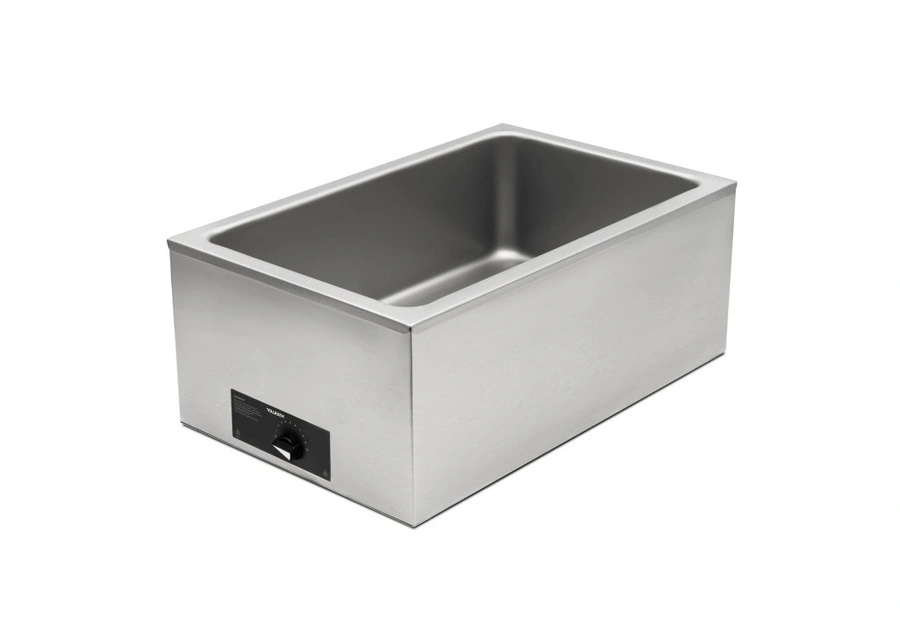
A food warmer has one job: hold cooked food at a safe serving temperature until it is served. It does not cook, and it should not be used to bring cooled food back up to temperature. Choosing the right one depends less on brand than on how your kitchen actually moves food, meaning how much you hold, for how long, where it is served, and what power is available. This guide walks through the main types, how to size them, and the questions to answer before you buy.
What a Food Warmer Does (and Does Not Do)
Food warmers maintain the temperature of food that is already hot. Their heating elements are sized to replace the heat that food loses over time, not to heat a cold pan from scratch. If you load a warmer with food that has already cooled, it will spend a long time in the temperature range where bacteria grow fastest.
Under the FDA Food Code, foods that need temperature control for safety should be held hot at 135°F (57°C) or above. Some state and local codes set a higher number, such as 140°F, so check the rule that applies to your operation.
Two practical rules follow from that:
- Hold, do not reheat. Load the warmer with food that is already hot, in pans that are already warm.
- Preheat the warmer. Turn it on empty and let it reach temperature before the first pan goes in.
The Main Types at a Glance
| Type | How it heats | Best for | Watch for |
|---|---|---|---|
| Heated holding cabinet | Enclosed cabinet with radiant or circulating heat, often with moisture control | Large batches held for longer periods, mobile use | Footprint, weight, and power requirements |
| Countertop dry warmer | Radiant or direct-contact heat from above or below | Pans at the point of service, shorter holds | Food surfaces drying out |
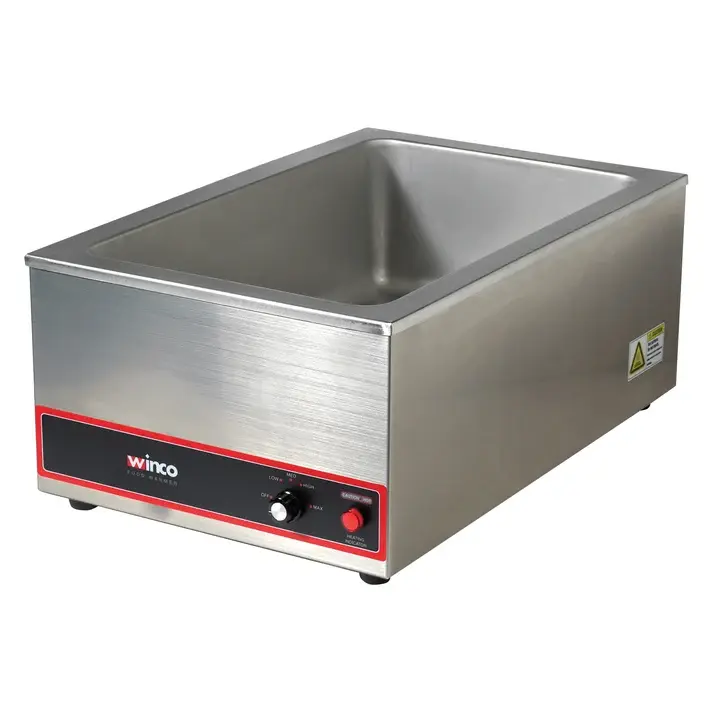
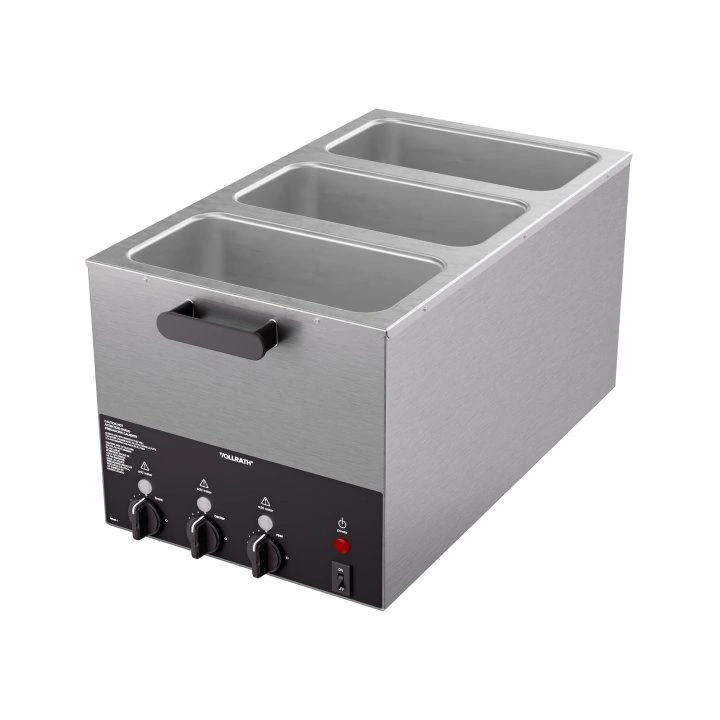
| Wet-heat warmer (bain-marie) | Heated water bath around the pans | Soups, sauces, rice, mashed potatoes, and other moist foods | Water levels, mineral buildup, cleaning |
| Drop-in well | Built into a counter, wet or dry | Permanent serving lines | Installation and utility connections |
| Heat lamp or strip warmer | Overhead infrared heat | Plated food, fried items, pass-through windows | Holds measured in minutes, not hours |
| Rethermalizer | Water bath designed to bring chilled, pre-cooked items up to temperature | Soups and sauces prepared ahead and chilled | A standard holding warmer cannot do this job |
 Countertop Warmer Hatco HW-FUL Electric Food Pan Warmer
 Bain-Marie Heater Hatco FR-6 Electric Bain Marie Heater
 Heated Shelf Hatco GRSSR-16 Portable Heated Shelf Warmer
 Rethermalizer Vollrath Mirage Induction Soup Rethermalizer
Wet Heat or Dry Heat: The Deciding Factor
The biggest difference between food warmers is how they deliver heat. Wet-heat units use a water or steam bath. Dry-heat units use direct contact or radiant heat.
| Wet heat | Dry heat | |
|---|---|---|
| Moisture | Keeps food moist | Tends to dry out food over time |
| Best foods | Soups, sauces, rice, pasta, mashed potatoes, vegetables | Fried foods, breaded items, baked goods, roasted meats |
| Setup | Needs water and regular refilling | No water to manage |
| Cleaning | Drain and descale regularly | Wipe down surfaces |
| Risk | Soggy breading, condensation | Dry, crusted edges |
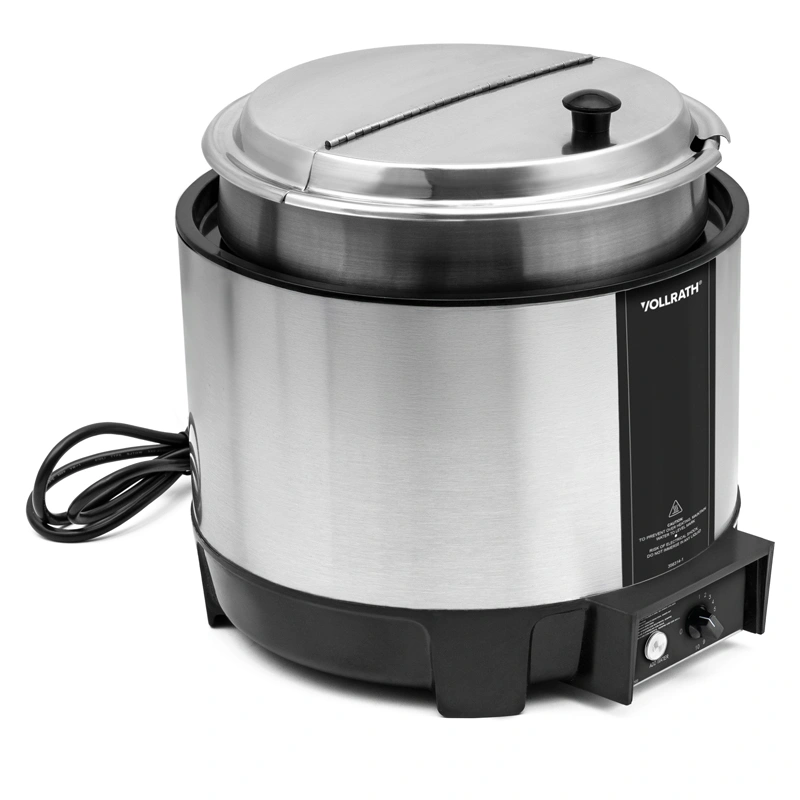 For Soups & Sauces Vollrath 72009 11-Qt. Cayenne Heat 'N Serve Warmer
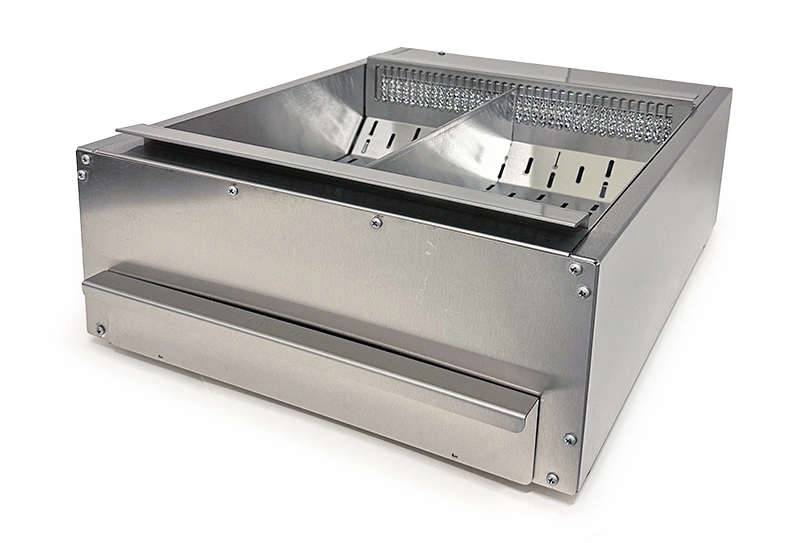 For Fried Foods Nemco 6075 ThermalPRO Fried Food Holder
Many kitchens end up using both, with a wet-heat unit for the sauces and sides and a dry-heat unit for fried and baked items.
Six Questions to Answer Before You Buy
1. How much do you need to hold at one time?
Count pans or portions at your busiest point, not your average. A warmer that is full at peak is the right size. One that is half empty wastes space and power, and one that cannot hold the peak forces you to cook or serve in a rush.
2. How long will food wait?
If food moves quickly from the cookline to the guest, a countertop warmer is usually enough. If batches wait an hour or more between production and service, a holding cabinet with good insulation and moisture control protects quality better.
3. What kind of food are you holding?
Moist foods need wet heat or a humidity-controlled cabinet. Crisp foods need dry heat and short holds. Mixing both in one unit usually compromises one of them.

4. Where will it be served?
A fixed serving line can use drop-in wells or countertop units. If the warmer has to move between rooms or to a delivery point, look for casters, handles, and a footprint that fits through your doorways and elevators.
5. What power do you have?
Many countertop warmers run on a standard 120V outlet. Larger cabinets may need 208V or 240V service. Check the voltage and amperage on the spec sheet before you order, and see the section on power below.
6. What pans will you use?
Warmers are built around standard pan sizes. Confirm the unit accepts the pans you already own, or plan to buy new ones. Our hotel pan sizing guide covers the standard sizes and depths.
Sizing: Count Pans, Not Square Feet
A simple method works for most kitchens:
- Estimate the portions you serve per hour at peak.
- Decide how often you refill, for example every 30 minutes.
- Multiply to find the portions you must hold at any moment.
- Divide by the number of portions one pan holds at your serving size.
- Add 10 to 20 percent for headroom.
Here is an illustration. Say you serve 120 portions an hour at peak and refill every 30 minutes, so you need to hold about 60 portions. If one full-size pan holds about 20 portions at your serving size, you need three pans. With a 20 percent buffer, plan for four. Your serving size changes the pan count, so run the numbers with your own.
Power and Installation
Most commercial food warmers only need a standard power connection, but it is worth checking the electrical load before you buy.
- Amps equal watts divided by volts. A 1,500-watt warmer on a 120V circuit draws 12.5 amps.
- Continuous loads have a limit. Electrical codes generally limit continuous loads to 80 percent of a circuit's rating. On a 15-amp circuit, that is 12 amps.
- Plan for the whole circuit. Add up everything plugged into the same circuit, not just the warmer.
- Ask an electrician when you are adding several units, using 208V or 240V equipment, or installing drop-in wells.
Allow clearance around the unit for airflow and keep it away from walls and combustible materials as the manufacturer directs. Place it close to where food is served so the pans do not sit in transit.
Food Safety in Daily Use
- Check temperatures with a probe thermometer, not just the warmer's dial. The dial shows the air or plate temperature, not the food.
- Keep a log. Recording temperatures at regular intervals shows problems early and supports your inspection records.
- Cover pans to hold heat and moisture.
- Do not top off. Replace an old pan with a fresh one instead of adding new food on top of old.
- Follow your local code for how long held food may stay in service.
You can find accurate probe thermometers in our thermometers and timers category.
Care and Maintenance
| Task | How often |
|---|---|
| Empty, wash, and dry pans and wells | Daily |
| Drain wet-heat units and wipe interior | Daily |
| Descale wet-heat units (mineral buildup from hard water is a common cause of poor performance) | As needed, based on your water |
| Inspect cords, plugs, and door gaskets | Weekly |
| Check thermostat accuracy against a probe thermometer | Monthly |
| Follow the manufacturer's service schedule | As directed |
Brands Cook's Direct Carries
Cook's Direct carries commercial food warmers from brands including Adcraft, Nemco, Duke, Vollrath, and Winco, along with parts and accessories for food warmers and rethermalizers. Holding equipment is also available from manufacturers such as Cres Cor and Hatco. Availability changes, so browse the current selection on the category pages.
Quick Buying Checklist
- Count the pans or portions you must hold at peak, and add 10 to 20 percent
- Decide how long food will wait before it is served
- Match wet heat or dry heat to the food you serve
- Confirm the voltage, amperage, and pan sizes
- Plan for a probe thermometer and a temperature log
- Check that the unit fits where it will be used, including doorways if it moves
Related Guides
- Portable food warmers for catering, buffets, and holiday service
- Heated holding cabinets vs. countertop food warmers
Ready to choose? Browse our full selection of commercial food warmers, or call our team at 866-613-2617 and we will help you find the right fit for your kitchen.
