





















How to Choose Insulated Meal Trays for Correctional Facilities
Choosing an insulated meal tray for a correctional facility comes down to a handful of factors that matter far more than they do in typical foodservice settings: durability under stress, compliance certification, and consistency across a large-volume purchase. Get these right and you avoid mid-year replacement orders, failed inspections, or trays that don't hold up to daily handling.
This guide walks through what to look for before you buy. If you've already calculated how many trays you need, see our guide on how many meal trays a correctional facility needs. If you're deciding between Cook's Brand tray models specifically, our Gorilla vs Marathon comparison breaks down the differences in detail.
What to Look For: The Buying Checklist
| Factor | What to Look For | Why It Matters |
|---|---|---|
| Material | High-density polyethylene or polypropylene composite, not thin-gauge plastic | Determines impact resistance and lifespan under daily institutional use |
| NSF Certification | Confirmed NSF certification on the spec sheet | Required for compliance in most correctional and institutional foodservice contracts |
| Compartment Count | 6-compartment standard for portion control, or check your facility's dietary requirements | Matches serving requirements and reduces cross-contamination between food types |
| Insulation Rating | Manufacturer-stated temperature retention time | Critical if meals travel more than 10-15 minutes from kitchen to point of service |
| Stackability | Confirmed nesting design for storage and cart loading | Affects storage footprint and loading speed onto delivery carts |
| Dishwasher Compatibility | Rated for commercial dishwasher temperatures (180°F+) | Standard commercial washing cycles run hotter than residential units |
| Weight (Empty) | Compare across brands for your specific handling model | Heavier trays are more durable but harder for staff to carry in volume |
| Color/Identification | Available in multiple colors if you need visual sorting by wing or diet type | Useful for facilities managing special diets or multiple housing units |
Material Matters More Than It Seems
The single biggest factor in tray lifespan is material. High-density polyethylene (HDPE) resists cracking under repeated impact and is the standard choice for maximum security and high-abuse environments. Polypropylene composite trays are lighter and flex under stress rather than cracking, making them a better fit for lower-handling environments like healthcare facilities and schools.
Avoid trays made from thin-gauge or unreinforced plastic. While cheaper upfront, they crack and warp far faster under institutional dishwasher cycles and daily handling, leading to more frequent replacement purchases that erase any initial savings.
NSF Certification Is Non-Negotiable
Most correctional facility procurement requirements mandate NSF-certified foodservice equipment. Always request documentation confirming certification before finalizing a purchase, since reputable suppliers will have this readily available. Trays without certification can create compliance issues during facility inspections.
Insulation Performance and Delivery Distance
If your facility delivers meals across multiple wings or via in-cell delivery, insulation performance becomes a critical factor. Ask suppliers for manufacturer-stated temperature retention times rather than relying on general marketing claims. A tray that holds temperature for 20 minutes may be sufficient for a single dining hall but inadequate for multi-wing distribution that takes 30-40 minutes door to door.
Questions to Ask Before You Buy
Beyond the physical specifications, these questions help you evaluate the supplier relationship, which matters as much as the product itself for an ongoing institutional purchase:
| Question to Ask | Why It Matters |
|---|---|
| What is the average lifespan under daily correctional use? | Sets realistic expectations for your annual replacement budget |
| Is the tray NSF certified, and can you provide documentation? | Required for procurement compliance and audits |
| What is the warranty or defect policy? | Protects against manufacturing defects showing up early in the tray's life |
| Can trays be ordered in bulk with volume pricing? | Institutional orders of 300+ trays should qualify for better per-unit pricing |
| What is the lead time for reorders? | Avoids mid-year shortfalls if your facility runs a tight replacement cycle |
Bulk Purchasing Considerations
Correctional facility meal tray orders typically run into the hundreds of units. When purchasing at this volume:
- Confirm volume pricing tiers: most suppliers offer meaningful discounts above 300-500 units
- Order your first-year replacement stock (typically 10-15% of your total count) alongside your initial order to lock in pricing
- Ask about consistent SKU availability: facilities that reorder the same tray model year over year avoid compatibility issues with existing stacks and carts
Cook's Brand Options
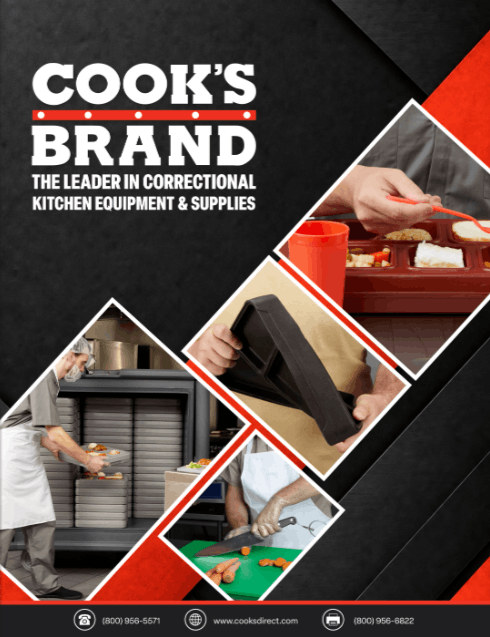
Cook's Direct offers two institutional meal tray lines built specifically for correctional and high-volume feeding environments: the Cook's Gorilla Tray, built for maximum durability in high-abuse settings, and the Cook's Marathon Tray, built for insulation performance and lighter handling. Both meet NSF certification and standard institutional compartment requirements.
Summary: Your Buying Checklist
- Confirm material: HDPE for high-abuse environments, polypropylene composite for lighter handling
- Verify NSF certification with documentation
- Check insulation rating against your facility's delivery distance
- Ask about warranty, lead time, and bulk pricing before committing
- Order first-year replacement stock alongside your initial purchase
Ready to order? Cook's Direct supplies NSF-certified meal trays to correctional facilities nationwide, with volume pricing and dedicated support for institutional orders. Call us at 1-800-958-0377 or:
