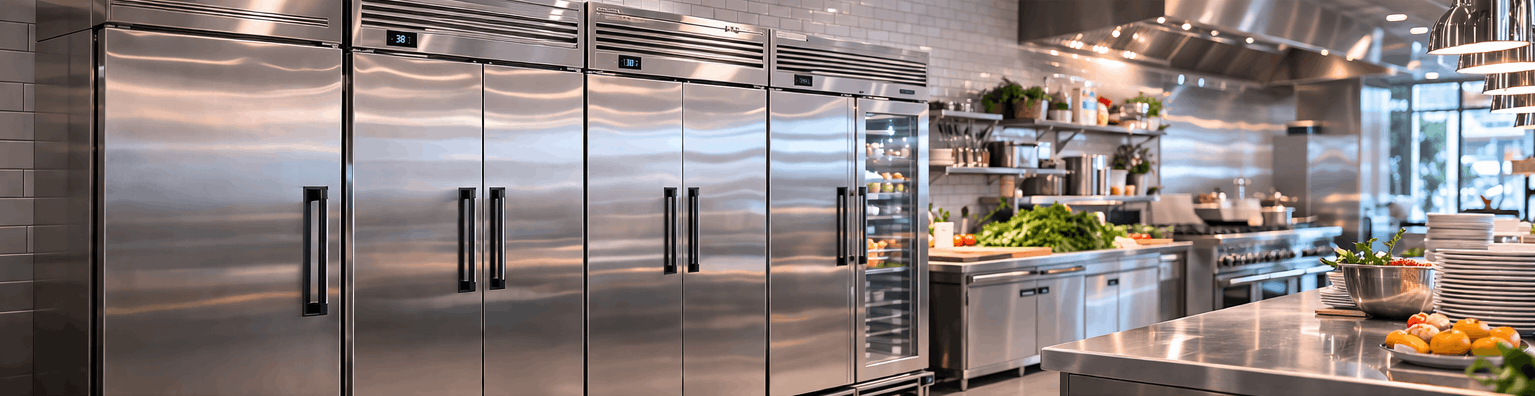
Commercial refrigerators are the backbone of any foodservice operation—helping maintain food safety, support compliance, and improve kitchen efficiency. Unlike residential units, they’re designed for high-volume use, rapid temperature recovery, and demanding commercial environments.
Why Commercial Refrigeration Matters
A commercial refrigerator is more than cold storage. It is a critical operational asset that protects food quality, supports safety compliance, and helps your staff work faster and more efficiently.
Food Safety
Maintains safe holding temperatures and helps reduce spoilage and compliance risk.
Efficiency
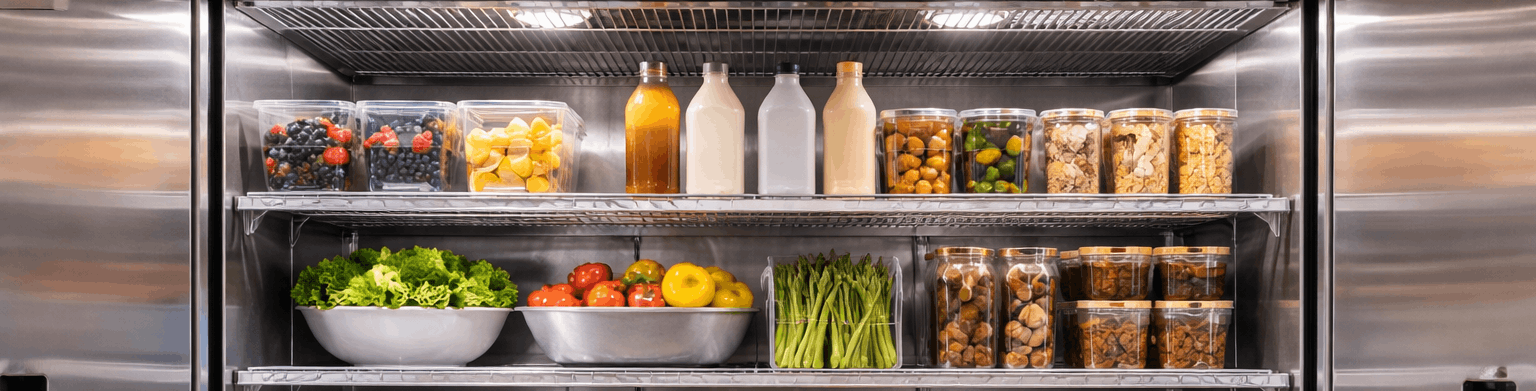
Organized storage keeps ingredients accessible and improves back-of-house workflow.
Durability
Built for the rigors of commercial kitchens with heavy-duty materials and components.
Cost Control
Can help reduce waste, lower utility costs, and prevent avoidable replacement expenses.
Types of Commercial Refrigerators
The best refrigerator for your operation depends on your volume, space, menu, and workflow needs.
1. Reach-In Refrigerators
Best for: Restaurants, schools, healthcare kitchens, and general back-of-house use.
- Available in one-, two-, and three-door configurations
- Easy access to frequently used ingredients
- Solid or glass door options available
2. Walk-In Coolers and Freezers
Best for: High-volume operations and facilities buying in bulk.
- Large storage capacity
- Flexible interior layouts
- Supports centralized inventory storage
3. Undercounter Refrigerators
Best for: Tight kitchens, bars, cafes, and compact prep areas.
- Saves space without sacrificing accessibility
- Fits below work surfaces
- Convenient for high-frequency ingredient access
4. Prep Tables and Worktop Refrigeration
Best for: Pizza lines, sandwich stations, and assembly-focused kitchens.
- Combines cold storage with prep space
- Keeps ingredients within arm’s reach
- Improves line efficiency
5. Display Refrigerators
Best for: Cafeterias, grab-and-go retail, concession, and merchandising.
- Improves visibility and impulse purchases
- Glass doors enhance presentation
- Useful in front-of-house applications
How to Choose the Right Commercial Refrigerator
1. Size and Capacity
Start by evaluating how much product you store daily, how often deliveries arrive, and how much reserve space you need during peak periods.
2. Kitchen Space and Layout
Measure the installation area carefully, including doorways, hallway turns, ventilation clearance, and any nearby equipment that generates heat.
3. Temperature Requirements
Different ingredients and service models may require different storage conditions. Make sure the refrigerator can maintain stable temperatures consistently during service.
4. Energy Efficiency
Look for efficient compressors, quality insulation, LED lighting, and ENERGY STAR-rated options where available. These choices can reduce long-term operating costs.
5. Build Quality and Materials
Stainless steel exteriors and interiors are common in high-performance commercial equipment because they are durable, easy to clean, and well suited to demanding environments.
6. Door Type
Solid doors typically offer better insulation, while glass doors improve visibility and product presentation.
7. Compressor Location
Top-mounted compressors can perform well in hotter kitchens, while bottom-mounted configurations may provide easier service access and ergonomic loading.
Key Features to Look For
Cost Breakdown and ROI
The true cost of a commercial refrigerator includes the purchase price, energy consumption, maintenance, service calls, and the effect on food waste.
Undercounter Units
$1,000–$3,000
Reach-In Refrigerators
$3,000–$10,000
Walk-In Systems
$10,000+
Common Mistakes to Avoid
Maintenance Tips for Longer Equipment Life
- Clean condenser coils regularly
- Inspect and replace damaged door gaskets
- Check and log temperature performance daily
- Keep interior shelving and airflow paths clear
- Schedule preventative maintenance with qualified technicians
Best Commercial Refrigerator Brands
Depending on your needs and budget, popular brands may include True, Turbo Air, Traulsen, Beverage-Air, and other foodservice-ready manufacturers.
Commercial Refrigerator Buying Checklist
Frequently Asked Questions
What size commercial refrigerator do I need?
That depends on your menu, delivery schedule, prep volume, and available space. Operations with higher throughput typically benefit from larger reach-ins or walk-in storage.
How long do commercial refrigerators last?
Many commercial units last 10 to 20 years or longer with proper maintenance, responsible use, and timely servicing.
Are commercial refrigerators more energy efficient today?
Yes. Many newer units offer better insulation, smarter controls, improved compressors, and lower operating costs than older models.
Ready to Find the Right Commercial Refrigerator?
The right refrigeration solution can improve workflow, reduce waste, protect food quality, and support long-term savings.
Browse Commercial Refrigerators